







It’s not a myth. It’s not just marketing hype. It’s a reality that thousands of seniors experience every day on the French Riviera: ever since they left Lyon, Brussels, Stockholm, or Paris, their joints have been thanking them.
The link between climate and joint pain has been documented, studied, and measured. And the verdict is clear: Nice’s Mediterranean climate is one of the most favorable in the world for people suffering from arthritis, osteoarthritis, or rheumatism.
Every year, Casa Barbara welcomes seniors who arrive stiff and leave feeling light. It’s not magic. It’s science, sunshine, and the art of living.
Here's what you need to know.
➡ See also: The Benefits of the Mediterranean Climate for Seniors' Health
1. The Mediterranean Climate and Arthritis: What the Science Says
The link between temperature, humidity, and joint pain
Your joints are sensitive to changes in the weather. It’s not just an old wives’ tale—it’s physiology.
Cartilage, tendons, and synovial tissue react to changes in atmospheric pressure, temperature, and humidity levels. When the weather turns bad, synovial fluid—the natural lubricant in your joints—behaves differently. The pressure inside the joint cavities changes. And pain sets in.
Conversely, gentle, steady heat helps stabilize these pressures. It relaxes the muscles around the joints. It improves local blood circulation. The result: joints move more easily, with less effort and less pain.
Why cold and humidity worsen arthritis symptoms
Cold is the number one enemy of inflamed joints. And humidity is its accomplice.
In cold, damp weather, blood vessels constrict, reducing blood flow to the extremities and joints. Muscles stiffen, as if in a constant state of alert. The viscosity of the synovial fluid increases. The joint becomes like a poorly oiled machine.
For people with rheumatoid arthritis or osteoarthritis, a northern winter isn’t just a season—it’s a nightmare. Every morning that starts at 2°C with 90% humidity is yet another morning spent battling their own pain.
Nice, with its mild winters and dry air, puts an end to this vicious cycle.
Scientific studies on the impact of hot, dry weather on the joints
Science is weighing in. Several landmark studies confirm what patients intuitively feel.
A study published in the Journal of Rheumatology found a significant correlation between low temperatures, rising barometric pressure, and the intensity of pain in arthritis patients. Another study, conducted by the University of Manchester on more than 13,000 participants, showed that humidity was the most significant weather factor influencing the perception of joint pain.
INSERM, for its part, points out that chronic joint inflammation is exacerbated by cold, damp environments, and that dry heat provides conditions conducive to reducing inflammatory flare-ups.
Nice’s Mediterranean climate fits this ideal profile perfectly: warm, dry, and stable. Three qualities that are good for your joints.
2. The characteristics of Nice’s Mediterranean climate that are beneficial for joints
300 days of sunshine a year: a boon for joint health
Nice is the sunniest city in mainland France. 300 days of sunshine a year isn’t just a tourist selling point—it’s a medical fact.
Constant sunshine keeps temperatures above freezing practically all year round. It naturally warms the air and surfaces, providing a natural and constant source of heat. For the joints, this gentle, steady warmth feels like a giant, soothing hot water bottle.
Sunlight also stimulates serotonin production, reducing the perception of pain. This psychological benefit is no small matter for those living with chronic pain.
Low humidity that reduces inflammation
The relative humidity in Nice is significantly lower than in cities in northern and central France. The Mediterranean air is dry and light, and does not weigh down on the joints the way the heavy, humid air of a Breton autumn or a Parisian winter can.
This low humidity naturally reduces joint swelling and the feeling of heaviness in the limbs. Seniors who have moved from humid regions often notice this within the first few days: their hands open more easily in the morning, and their knees ache less when climbing stairs.
Mild temperatures all year round: fewer temperature fluctuations
In Nice, temperature fluctuations are minimal. You don’t go from 25°C to 5°C overnight. This stability is beneficial for the joints, which are sensitive to sudden temperature changes.
In January, the average daytime temperature is 12°C. In July, it rarely exceeds 28°C in the shade. Never bitterly cold, never sweltering. An almost ideal balance for keeping joints in optimal comfort all year round.
Seaside air and its natural anti-inflammatory properties
Mediterranean sea air is rich in negative ions, salt, and minerals. Studies in thalassotherapy have demonstrated its anti-inflammatory effects on muscle and joint tissue. Breathing in the Mediterranean air is like treating yourself to a daily mini-treatment—free of charge and without a prescription.
The trace elements found in seawater, particularly magnesium and iodine, help regulate inflammatory processes. People with osteoarthritis or rheumatoid arthritis who live near the sea often report a decrease in the frequency and severity of their flare-ups.
3. Vitamin D, sunshine, and bone health: the winning trio in Nice
The crucial role of vitamin D in reducing joint pain
Vitamin D isn't just good for your bones. It plays a key role in joint health.
Research published in Arthritis & Rheumatology have shown that vitamin D deficiency is associated with more severe pain in osteoarthritis, rheumatoid arthritis, and fibromyalgia. Vitamin D regulates the expression of genes involved in inflammation. It modulates the activity of immune cells which, when dysregulated, attack joint cartilage.
In short: the more severe your vitamin D deficiency, the more your joints suffer. And according to INSERM, more than 80% of French people over the age of 60 are deficient in vitamin D during the winter.
How Mediterranean sunshine naturally meets the vitamin D needs of older adults
The human body synthesizes vitamin D through exposure to the sun's UVB rays. In Paris or Lille, between November and March, these rays are insufficient to trigger this synthesis. Dietary supplements are therefore necessary.
In Nice, the situation is completely different. Even in winter, there is enough sunlight to allow the skin to produce vitamin D. According to the WHO, just 20 minutes of daily sun exposure on the forearms and face is enough to meet the daily needs of a healthy senior.
Going out to run errands, sitting at an outdoor café, strolling along the Promenade: in Nice, these everyday activities become acts of wellness.
Vitamin D and the Prevention of Osteoporosis After Age 60
Arthritis and osteoporosis are often unwelcome companions for older adults. Vitamin D plays a key role in helping calcium bind to bones, thereby reducing the risk of fractures and bone fragility.
The WHO estimates that an optimal intake of vitamin D, combined with regular outdoor physical activity, can reduce the risk of fractures among older adults by 30%. In Nice, both of these conditions are naturally met every day of the year.
➡ See also: Living in Nice after age 60: a lifestyle choice that’s good for your health
4. Gentle outdoor activities: stay active without suffering from the Nice climate
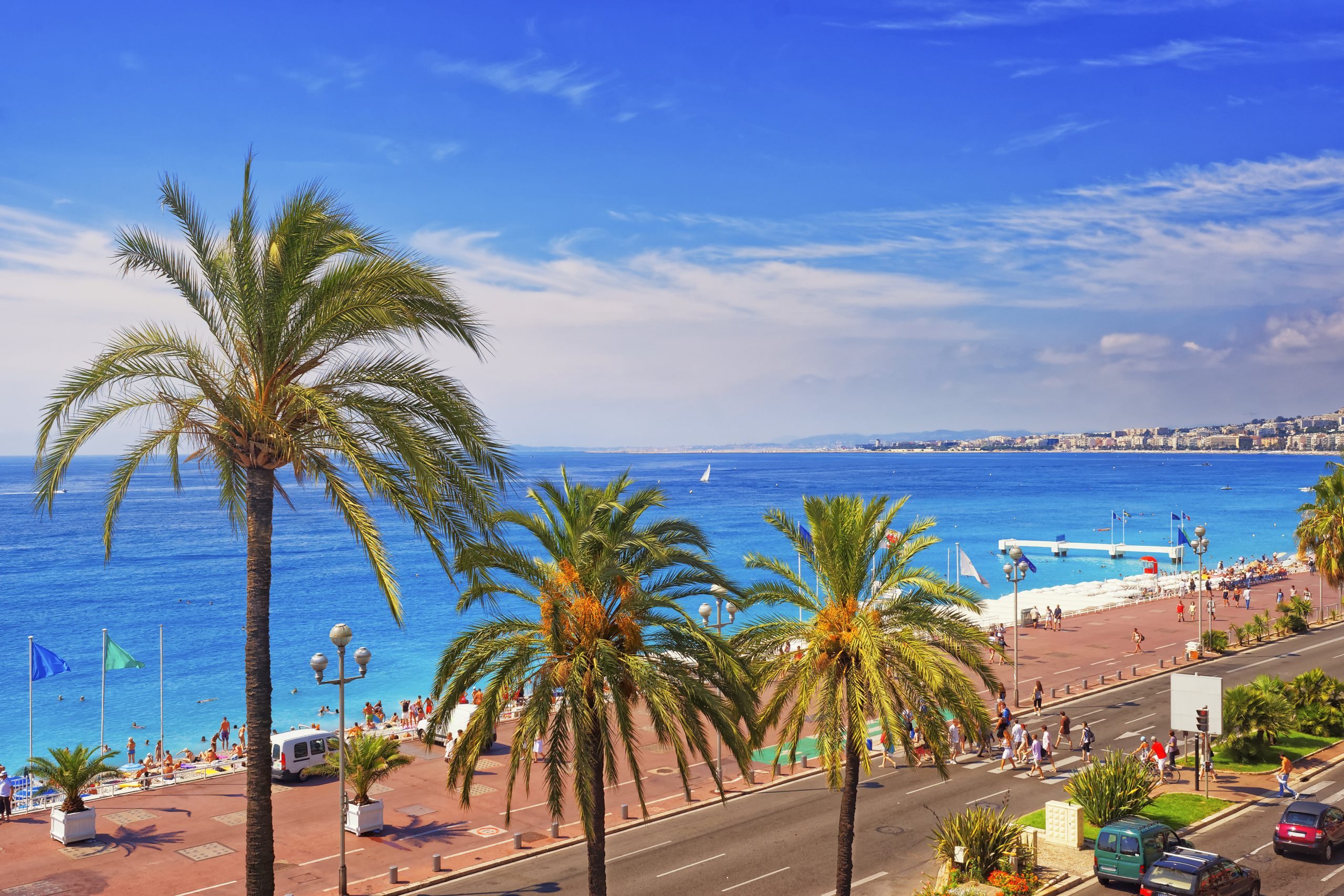
A walk along the Promenade des Anglais: great for your joints
Exercise is the best treatment for arthritis. Not despite the pain, but to reduce it. It may seem counterintuitive, but it’s a proven fact. Inactivity worsens joint stiffness. Exercise maintains cartilage, strengthens stabilizing muscles, and reduces inflammation.
The Promenade des Anglais offers 7 kilometers of flat walking terrain, easily accessible to people of all mobility levels. With even ground, fresh sea air, and ocean views, the conditions are ideal for walking without risk of injury. And thanks to Nice’s climate, this promenade is accessible 365 days a year.
Regular walking reduces the progression of knee osteoarthritis by 40%, according to a study published in Arthritis Care & Research. In Nice, the weather is never an excuse to stay indoors.
Yoga, tai chi, and gentle exercise outdoors all year round
Yoga and tai chi are recognized by the rheumatology community as practices that are particularly well-suited for managing chronic joint pain. They improve flexibility, balance, and proprioception, and reduce the perception of pain.
In Nice, these activities take place outdoors almost all year round—in parks, on terraces, and by the sea. At Casa Barbara, yoga and Pilates are part of the daily schedule, often held outdoors when the weather permits. Access to the Technogym fitness center rounds out the offerings, providing tailored and supervised strength training.
Swimming and water activities in the Mediterranean to relieve joint pain
Water is the most beneficial element for painful joints. By relieving the body of its weight, it allows for full joint mobility without impact. In fact, swimming is the first activity recommended by rheumatologists for patients with arthritis.
The Mediterranean Sea off the coast of Nice is suitable for swimming from June to October, with water temperatures ranging from 22°C to 27°C. And throughout the year, the region’s many thalassotherapy and balneotherapy centers extend these aquatic benefits.
Electric bikes and senior-friendly coastal rides
Nice is a bike-friendly city, with a network of bike paths along the coast and in the inland areas. Electric bikes are a game-changer for seniors with joint pain: they allow riders to pedal without excessive effort, keeping the knees and hips moving without straining them.
Coastal walks between Nice and Antibes or toward Monaco offer flat, scenic routes. At Casa Barbara, flexible stays allow you to explore the region at your own pace, without the constraints of a set itinerary.
5. Testimonials and feedback from seniors living in Nice
Seniors from Northern Europe report that their pain has improved
The French Riviera has a long history with winter visitors from the north. As early as the 19th century, British and Russian aristocrats would come to Nice to spend the winter and relieve their rheumatism. It wasn’t just a fad. It was a health strategy.
Today, this tradition continues. Seniors from Scandinavia, Germany, the United Kingdom, and Belgium move to Nice every year for the winter, and many end up staying year-round. Their accounts are remarkably consistent: within a few weeks, the frequency and intensity of their joint pain decrease. Their mobility improves. So does their mood.
Living on the French Riviera: a life-changing experience that transforms everyday life
It’s not just the climate that makes a difference. It’s the overall lifestyle that this climate makes possible: getting out more, walking more, socializing more, and staying active longer. Seniors living in Nice spend less energy fighting the cold, layering up, and staying cooped up at home during weeks of gray weather.
They devote this saved energy to living. It’s a simple equation, but its effects on physical and mental health are profound and well-documented.
What the residents of Casa Barbara say about the climate in Nice
At Casa Barbara, our members often arrive feeling apprehensive. A few weeks later, they leave with plans—to come back next winter, or even to stay for good.
Many people mention the same surprise: their mornings feel different. No more lingering stiffness when they wake up. Less time needed to “get going.” They’re able to go for walks again. Stairs don’t seem so daunting anymore. This is no small thing. For someone who has lived with arthritis for years, regaining control of their mornings is a huge deal.
➡ See also: our treatments and wellness programs to relieve joint pain
6. The Limitations of the Mediterranean Climate: What You Need to Know Before Moving There
The climate alone is no substitute for regular rheumatology care
Let’s be honest. The sun in Nice isn’t a prescription. It’s no substitute for your rheumatologist, your long-term treatments, or your physical therapist.
The Mediterranean climate provides a favorable environment: it reduces the frequency of flare-ups, improves daily joint comfort, and encourages physical activity. However, severe rheumatic conditions, particularly rheumatoid arthritis or advanced forms of osteoarthritis, require rigorous and ongoing medical monitoring.
The good news is that Nice has a particularly extensive network of medical services specializing in rheumatology, including several leading hospitals and effective community healthcare networks. Moving to Nice means choosing a welcoming environment AND maintaining access to the best specialists.
Intense summer heat: precautions for seniors
Summers in Nice can be hot. Very hot. In July and August, temperatures regularly exceed 30°C, and sometimes reach 35°C during heat waves.
For seniors, this intense heat calls for a few precautions: drink plenty of fluids, avoid going out in direct sunlight between noon and 4 p.m., and stay in air-conditioned or well-ventilated areas. At Casa Barbara, the residence is equipped to ensure our residents’ comfort even during periods of extreme heat. And the rooftop isn’t just a place for contemplation: it’s also a space carefully designed to let you enjoy the Nice sky without suffering from its intensity.
The Importance of Combining a Healthy Environment with a Healthy Lifestyle
The Importance of Combining a Favorable Climate with a Healthy LifestyleThe Mediterranean climate is a tremendous opportunity. It isn’t everything, but it makes everything possible.
What truly transforms the lives of seniors with arthritis in Nice is a winning combination: a favorable climate, a Mediterranean diet rich in omega-3s and antioxidants, gentle and regular physical activity, a stimulating social life, and quality sleep. None of these factors alone produces the same results. Taken together, however, they are remarkably effective.
7. Why Nice Is the Ideal Destination for Seniors Suffering from Joint Pain
Nice, the sunniest city in mainland France
The figures speak for themselves. Nice averages 2,724 hours of sunshine per year, compared to 1,700 in Paris and 1,500 in Brest. It is the sunniest city in mainland France, ahead of Marseille, Toulon, and Montpellier.
For a senior suffering from arthritis, those 1,000 extra hours of sunshine compared to the capital mean 1,000 fewer hours of enduring the cold, damp, and pain. When translated into days of regained quality of life, that’s a significant difference.
Easier access to specialized rheumatology care on the French Riviera
Moving to a sunny city doesn’t mean you have to give up on your skincare routine. Quite the contrary.
Nice is home to the Nice University Hospital, one of the ten largest in France, with a renowned rheumatology department. The Provence-Alpes-Côte d'Azur region also boasts a dense network of private rheumatologists, rehabilitation centers, and thalassotherapy and thermal spa facilities. Institutions such as the Mediterranean Institute of Rheumatology offer integrative approaches that combine medical treatment with the benefits of the local climate.
You don’t have to choose between quality of life and quality of care. In Nice, you get both.
The Saint-Roch neighborhood: a peaceful living environment ideal for active seniors
Not everything happens at the beach or along the Promenade. The real daily life of Nice’s seniors takes place in the neighborhoods. And the Saint-Roch neighborhood, where Casa Barbara is located, is one of the best-suited for active seniors.
Quiet without being isolated, lively without being stressful. Local shops are within walking distance. The extensive and modern public transportation system allows you to reach downtown, the beach, or the countryside without a car. The tram stops right outside the door of Casa Barbara. For seniors with limited mobility, this accessibility is a real relief.
Casa Barbara: a luxury senior living community in the heart of Nice’s mild climate
Casa Barbara is not a nursing home. It is not a hotel. It is not your typical assisted living facility.
It’s a club-style residence. A living space designed by the Trigano family—the creators of Club Med and Mama Shelter—for seniors who want to live life to the fullest, freely and joyfully. The restaurant, Le Barbara, was conceived in collaboration with three-star chef Pierre Gagnaire. The activities—ranging from Pilates to philosophy discussions and dance classes—are designed to nourish both body and mind. The Technogym is available for supervised fitness training.
And best of all: the stay is tailored to you. A week to try it out. A month to get a feel for it. Longer to truly experience it.
8. Choose a senior living community in Nice to fully enjoy the benefits of the climate
The advantages of a senior living community over a traditional apartment for people with arthritis
Moving to Nice and settling into a traditional apartment is one option. But for a senior citizen suffering from joint pain, it also presents a series of daily challenges: the administrative tasks involved in moving, coordinating with service providers, adapting the living space, and the potential for isolation in an unfamiliar environment.
A senior living community like Casa Barbara eliminates these hassles. The environment is designed with mobility and comfort in mind. The amenities are all there. The community is there. And the staff ensures consistent service, whether you need medical advice, an activity, or simply a good meal.
For someone visiting Nice for the first time, this is the perfect way to settle in with peace of mind and all the support you need.
Casa Barbara's services are designed to promote the well-being and mobility of seniors
At Casa Barbara, everything is designed to ensure that movement remains possible, enjoyable, and safe.
- Adapted Pilates and yoga, led by professionals trained in joint conditions
- Technogym fitness room with low-impact strength training and cardio equipment
- Dance classes to maintain coordination and flexibility while having fun
- Rooftop for enjoying the outdoors and soaking up some healthy sun
- Le Barbara Restaurant, serving Mediterranean cuisine that is naturally rich in anti-inflammatory foods
Freedom of movement, preserved and encouraged every day: that is at the heart of our mission.
How to Prepare for Moving to Nice After Age 60
A trip to Nice isn't something you can just wing. But it doesn't have to drag on either.
The first step: come check it out. A week at Casa Barbara is all it takes to feel the difference in atmosphere, get your bearings in the neighborhood, and meet our community. That’s why we offer flexible stays starting at one week. No long-term commitment, no binding contract. Just the experience.
The second step: consult your rheumatologist before moving, so you can plan for the transition in your medical care. Nice has excellent healthcare providers, and we can help you find the specialists best suited to your situation.
Step three: choose your package. A week, a month, or much longer. At Casa Barbara, you’re the one who decides. Not the other way around.
The sunshine in Nice isn’t just a vague promise. It’s a fact. And for those with aching joints, it might just be the smartest decision of the decade.
Join the tribe. #ForeverYoung
🏠 Découvrez Casa Barbara, Book your free visit