







Social connections are often underestimated. Yet they may be the most powerful factor in longevity.
La retraite marque souvent une rupture nette. Du jour au lendemain, le cadre professionnel, ses collègues, ses rituels, sa stimulation quotidienne, disparaît. Pour beaucoup, c’est une libération. Pour d’autres, c’est le début d’un isolement qu’on n’avait pas anticipé.
Yet the science is clear: social isolation is just as harmful to health as smoking. Social connections, on the other hand, protect the brain, boost the immune system, and increase life expectancy.
Bonne nouvelle : rester socialement actif après 60 ans ne demande pas de reconstruire une vie entière. Ça demande de faire les bons choix, au bon endroit.
At Casa Barbara, we built our business model around this very belief. Here’s what we’ve learned.
1. Why social connection is a matter of health, not comfort
Social connection is not a luxury. It is a physiological need, backed by decades of research.
L’OMS classe l’isolement parmi les principaux facteurs de risque pour la santé des seniors. Les chiffres sont sans appel : la solitude chronique augmente le risque de démence de 50 %, le risque cardiovasculaire de 29 %, et réduit l’espérance de vie dans des proportions comparables au tabagisme, soit l’équivalent de 15 cigarettes par jour.
Conversely, people with active social lives sleep better, recover more quickly from illness, maintain their cognitive function for longer, and report significantly higher levels of happiness.
This isn't positive psychology. It's biology: social interaction stimulates the production of oxytocin, reduces cortisol, and activates the same reward circuits as eating or sleeping.
➡ See also: The Benefits of the Mediterranean Climate for Seniors' Health
2. The Three Social Changes to Expect After Age 60
Social bonds aren’t lost all at once. They erode gradually. Identifying these breaking points is the first step toward being able to anticipate them.
Retirement
C’est la rupture la plus brutale. On perd en une journée un réseau social construit sur des années, une identité professionnelle et un cadre rythmique quotidien. Beaucoup de retraités témoignent d’un vide inattendu dans les premiers mois, même ceux qui attendaient ce moment avec impatience.
Children leaving home and family separation
Families tend to scatter across the country. Children move away, grandchildren grow up, and opportunities to get together become fewer and farther between. The once-bustling home can become quiet.
Grief and a shrinking circle of friends
Avec l’avancée en âge, on perd des proches. Amis d’enfance, conjoints, voisins de longue date. Chaque deuil rétrécit un peu plus le tissu social existant, et reconstruire à 70 ans ce qu’on a perdu demande une énergie qu’on n’a pas toujours.
Anticiper ces trois ruptures, c’est choisir un cadre de vie qui les amortit naturellement, plutôt que de devoir les traverser seul.
3. Five Practical Ways to Stay Socially Active
Engage in regular, structured activities
La régularité est la clé. Un atelier hebdomadaire, un cours de yoga le mardi matin, un club de lecture le jeudi soir : la répétition crée la familiarité, et la familiarité crée le lien. Les activités ponctuelles ne suffisent pas, elles ne génèrent pas les liens durables dont le cerveau a besoin.
Focusing on intergenerational activities
Le lien social le plus stimulant n’est pas forcément celui qu’on entretient entre pairs. Les échanges intergénérationnels, avec des petits-enfants, des jeunes voisins, des bénévoles, apportent une dynamique, une curiosité, une énergie différente. Et ils sont mutuellement bénéfiques.
Volunteer
Volunteering is one of the most effective ways to maintain social connections after age 60. It provides a sense of purpose, a weekly routine, and a social network that isn’t tied to family ties. From cultural organizations to food banks and youth mentoring, the opportunities are endless.
Entretenir les liens à distance, sans s’en contenter
Les appels vidéo, les groupes WhatsApp familiaux, les messages vocaux avec des amis lointains : tout cela compte. Des études montrent que les interactions numériques réduisent le sentiment de solitude, à condition de ne pas remplacer entièrement le contact physique. Le lien à distance est un complément, pas un substitut.
Choose a living environment that fosters social connections
It is the most powerful—and most underestimated—factor. Where we live largely determines the quality and frequency of our social interactions. A secluded apartment in an unfamiliar city, or a house that’s too big in a quiet neighborhood, is not socially neutral.
Choisir de vivre dans un environnement où le lien social est structurel, où les rencontres se font naturellement, sans effort, change fondamentalement l’équation.
➡ See also: Senior living community or traditional apartment: how to choose?
4. The decisive role of the environment
On parle beaucoup de volonté individuelle. Mais la recherche en sciences sociales est claire : le comportement humain est massivement influencé par l’environnement. On ne « décide » pas de rester actif socialement dans le vide, on le fait parce que le contexte s’y prête.
This is what urban planners call social design: creating spaces where people naturally come together. Welcoming communal spaces. Activities offered without obligation. A sense of community that doesn’t feel like a burden.
À Nice, la ville elle-même joue ce rôle : les marchés, les terrasses, les promenades, la douceur du climat qui pousse à sortir. Tout y conspire pour faciliter les interactions spontanées, ces micro-échanges quotidiens qui, mis bout à bout, forment le tissu d’une vie sociale riche.
5. What life is like for the members of Casa Barbara on a daily basis
Chez Casa Barbara, on a fait du lien social une architecture. Pas une promesse marketing, une réalité concrète, pensée dans les moindres détails.
The common areas are designed to be inviting: a rooftop with ocean views, a reading room, a shared gym, and a restaurant created in collaboration with three-star chef Pierre Gagnaire. These are places where you’ll want to linger, run into your neighbors, and strike up a conversation.
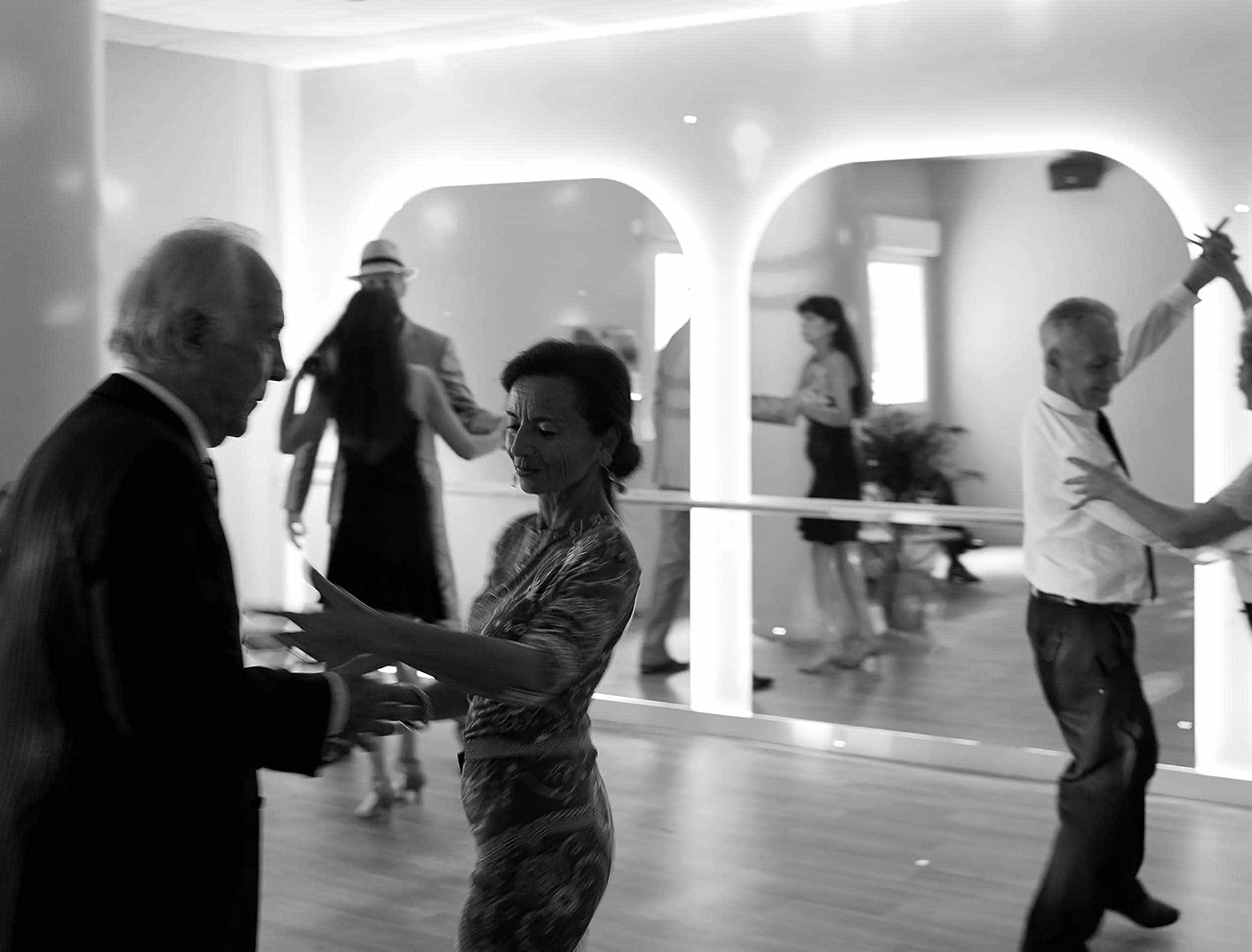
Le programme d’activités, ateliers créatifs, cours de danse, yoga en plein air, conférences, sorties culturelles, n’est pas obligatoire. C’est une offre, pas un emploi du temps. Et c’est précisément ce qui lui donne de la valeur : on y vient parce qu’on le souhaite, pas parce qu’on y est contraint.
Nos membres le disent souvent : ce qu’ils avaient cherché pendant des années dans des associations, des clubs, des réseaux d’amis, ils l’ont trouvé ici, naturellement, sans effort, dès les premières semaines.
6. Get started now: why not wait?
The most common pitfall: waiting until you “need” to take action. But social connections, like muscles, need to be maintained. It is infinitely easier to maintain an active social life than to rebuild one after years of isolation.
Neuroscience confirms it: the brain retains its capacity for social connection well beyond the ages of 60, 70, and 80. But like any skill, it needs to be practiced. Every new relationship, every regular interaction, and every shared activity strengthens the neural pathways that make social connection possible and enjoyable.
Starting early means choosing to age well. Not with resignation, but with vitality.
➡ See also: Sports and wellness for seniors in Nice: where to go?
Social connections: your best investment for retirement
On investit dans sa santé physique, dans son patrimoine, dans ses loisirs. Le lien social mérite le même soin, et probablement davantage.
The data is clear: the happiest, healthiest, and most cognitively sharp seniors at age 80 aren’t the ones with the best medical records. They’re the ones with the richest social lives. The ones who laugh often. The ones who have people around them.
Ce n’est ni un hasard, ni de la chance. C’est un choix. Et comme tout choix stratégique, il se fait en amont, avant d’en avoir besoin.